
Taper vs Fade vs Taper Fade: Which Haircut Actually Fits Your Style and Lifestyle?
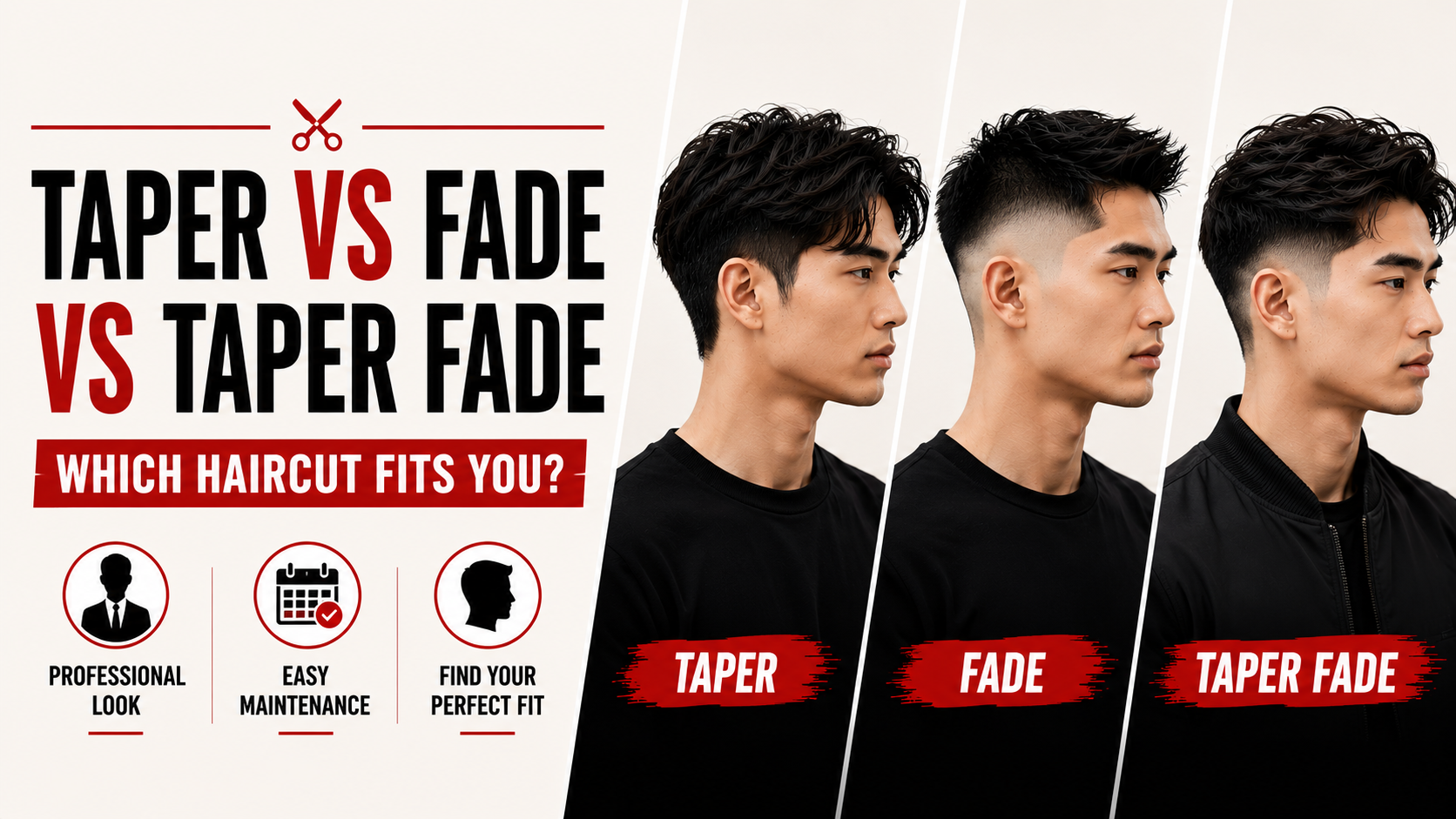
Walk into any barbershop, and the words taper, fade, and taper fade get tossed around like they all mean the same thing. They don't. The cuts look similar in photos; both have shorter sides and require a skilled hand to execute well. But the technique, the end result, and the upkeep are genuinely different from each other. Knowing exactly what you want before you sit in that chair changes the whole outcome.
Modern men are investing in regular barber visits more than ever, with taper and fade styles remaining some of the most requested cuts. Source: Barbershop Industry Statistics Report
What a Taper Actually Is
A taper is a controlled, gradual shortening of hair that moves from the crown downward toward the neckline and ears. The hair gets shorter as it goes down, but it never disappears completely. There is always some visible hair at the perimeter, just shorter than what sits on top.
The strength of a taper is its subtlety. It sharpens your overall look without making a statement about it. When someone has a well-done men's professional haircut, you notice they look put together. You don't necessarily clock the cut itself. That invisibility is exactly what makes it work in so many different settings.
Tapers also age well. Because the transition is gradual rather than abrupt, the style holds its shape for four to six weeks without looking neglected. For men who are not scheduling barber visits every couple of weeks, that durability is a real advantage.
What a Fade Actually Is
A fade is built entirely around contrast. Hair transitions from its full length on top down to very short, often right to the skin, at the sides and back. That contrast is the defining characteristic, and it is what gives a fresh fade its sharp, high-impact look.
Fades come in four main variations based on where the transition begins on the head:
Low fade: begins just above the ear, subtle and versatile
Mid fade: sits between ear and temple, balanced and modern in energy
High fade: starts near the temple, bold and high contrast in shape
Skin fade or bald fade: blended completely to the scalp for a seamless, dramatic finish
Each level suits a different face shape and lifestyle. A low fade behaves almost like a taper in feel and formality. A high skin fade makes a strong visual statement but demands consistent upkeep to stay looking intentional rather than grown out.
Where the Taper Fade Fits In
The taper fade sits in the middle ground. It borrows the gradual blending of a taper and the defined, close finish of a fade, giving you a cut that is polished without being conservative and sharp without being extreme. For men who want something cleaner than a classic taper but less dramatic than a full skin fade, this is the natural choice.
It works well across most hair types and face shapes, grows out more forgivingly than a high fade, and carries enough definition to hold a modern style without demanding constant maintenance.
Taper vs Fade vs Taper Fade: Side by Side
Here is a clear breakdown of how the three cuts compare across the factors that matter most.
| Feature | Taper | Fade | Taper Fade |
|---|---|---|---|
| Transition Style | Gradual length reduction | Abrupt drop to very short or skin | Gradual but defined blend |
| Skin Visible at Sides? | No, hair always remains | Often yes, especially skin/high fade | Sometimes, depends on the finish |
| Visual Contrast | Low, subtle, and refined | High, sharp, and bold | Medium, clean but not extreme |
| Best for Professional Settings? | Yes, excellent | Depends on fade height | Good in most workplaces |
| Maintenance Frequency | Every 4 to 6 weeks | Every 2 to 3 weeks | Every 3 to 4 weeks |
| Grows Out Gracefully? | Yes | No, contrast fades quickly | Mostly yes |
| Works on Thick, Straight Hair | Yes, with careful blending | Yes, very clean result | Yes, especially with a textured top |
| Style Energy | Classic, polished | Contemporary, bold | Modern, versatile |
| Best First-Time Pick? | Yes, best starting point | Not ideal, harder to adjust | Good second cut |
Which One Works Better for Professional Settings?
This is where the two cuts genuinely go in different directions. For a professional setting, whether that is client meetings, office environments, or formal occasions, the taper is consistently the more adaptable option. It reads as sharp and considered without leaning trendy, and it holds that credibility whether you are in a boardroom or at a dinner.
High and skin fades carry a more contemporary, style-forward energy that works well in creative industries, tech, or casual workplaces. But in traditional professional settings, the dramatic contrast of a skin fade can feel slightly at odds with the environment. The taper sidesteps that entirely.
The taper fade sits comfortably in the middle. It is professional enough for most workplaces, with enough definition to feel intentional and modern without demanding the same maintenance as a full fade.
What Celebrities Actually Wear
David Beckham is the clearest reference point for the professional taper done right. Through his transition from footballer to businessman, brand founder, and style figure, Beckham has consistently worn tapered sides that are clean and precise but never cut to the skin, paired with longer, well-styled tops.
That combination communicates both reliability and intentionality at the same time. It is exactly what a professional hairstyler would recommend for men whose appearance needs to work as hard as they do. If you are building a look that travels well between professional and social settings, Beckham's approach to the taper is a strong and consistent model to reference.
Matching the Cut to Your Face Shape
Face shape should drive a significant part of this decision. Here is how each shape maps to the right cut:
Oval face: maximum flexibility, both taper and fade suit you well
Round face: a mid or high fade with volume on top elongates and defines the face
Square face: a taper softens the strong jaw slightly, a fade amplifies it for a bolder result
Heart face (wide forehead, narrower jaw): a low taper or low fade keeps proportions balanced
If you are not sure of your face shape, take a straight-on photo and find the widest points. A good barber will work through this with you before recommending anything anyway.
Hair Texture Changes Everything
Hair texture matters just as much as face shape when choosing between these cuts. Thick, straight hair, which is common in Asian men, requires specific technical handling. Without the right approach, a taper on dense straight hair can add unwanted weight to the sides. A fade executed correctly on this hair type, by contrast, produces a notably clean and sharp result.
At Naamza in Los Angeles, barbers who specialise in Asian men's hair approach every cut through the lens of texture, density, and face shape before any style decision is made. Founder Sehwa brings over 20 years of experience across South Korea and the US, focused specifically on making thick, straight hair work beautifully at every length. The consultation process reflects that priority from the start.
Why the Stylist Matters as Much as the Style
The gap between a taper that looks precise and one that looks uneven comes entirely down to who is holding the clippers. The professional hair styler who has performed hundreds of tapers and fades develops a blending instinct over time. They know exactly which guard size to transition through, the angle of the clipper at each point, and when to shift from guided to freehand work. Those split-second decisions determine the final result.
This is why booking with a barber who specialises in your cut and hair type is genuinely worth the extra effort. At Naamza, barbers Will, Jake, Lucas, and Jimin each carry specific technical strengths. Clients return to particular barbers because consistency is part of what they are paying for. That level of reliability does not happen by accident.
Maintenance: The Practical Reality
For most men, how often they need to visit the barber makes the final call between these cuts.
A skin or high fade starts visibly softening within two weeks. After four weeks, the contrast that defined it is largely gone. Keeping it sharp means a barber visit every two to three weeks, which is a real time and cost commitment to take seriously.
A taper holds its shape for four to six weeks in most cases. The gradual blending means it grows out in a way that still looks like it was intentional rather than simply neglected. For men with demanding schedules or less flexibility around barber appointments, the taper is simply the more forgiving choice without giving up any professionalism.
A taper fade sits in between these two, typically needing a refresh every three to four weeks, depending on how closely the sides were cut.
FAQ
Q1: Can I get a taper fade if I have thick Asian hair?
Ans: Yes, and it can look exceptional when handled correctly. Thick straight hair holds the taper fade shape well, particularly when the top is styled with some added texture or a subtle perm to introduce movement. Ask specifically about your hair density when booking, or seek out a barber like those at Naamza who work with this hair type regularly. The difference in results between a generalist and a specialist is significant.
Q2: How do I ask my barber for the right cut if I am not sure what to call it?
Ans: Bring a photo. It removes every language barrier between you and your barber. Alongside the image, communicate three things: whether you want skin visible at the sides or some hair remaining, how high you want the transition to begin, and what you would like on top in terms of length and styling. A skilled barber translates that directly into the right cut for your head shape and hair.
Q3: Is a taper or fade better for a first-time barbershop visit?
Ans: Start with a low taper. It is conservative enough that if the result is not quite what you imagined, the adjustment is minimal and easy to correct. It also gives you a useful baseline. You will see how your hair responds to the shape and blend, and from that reference point, you can make informed decisions about moving toward a fade or a taper fade at a future appointment.
