Why Do Men With Thick Hair Need Different Cutting Techniques?
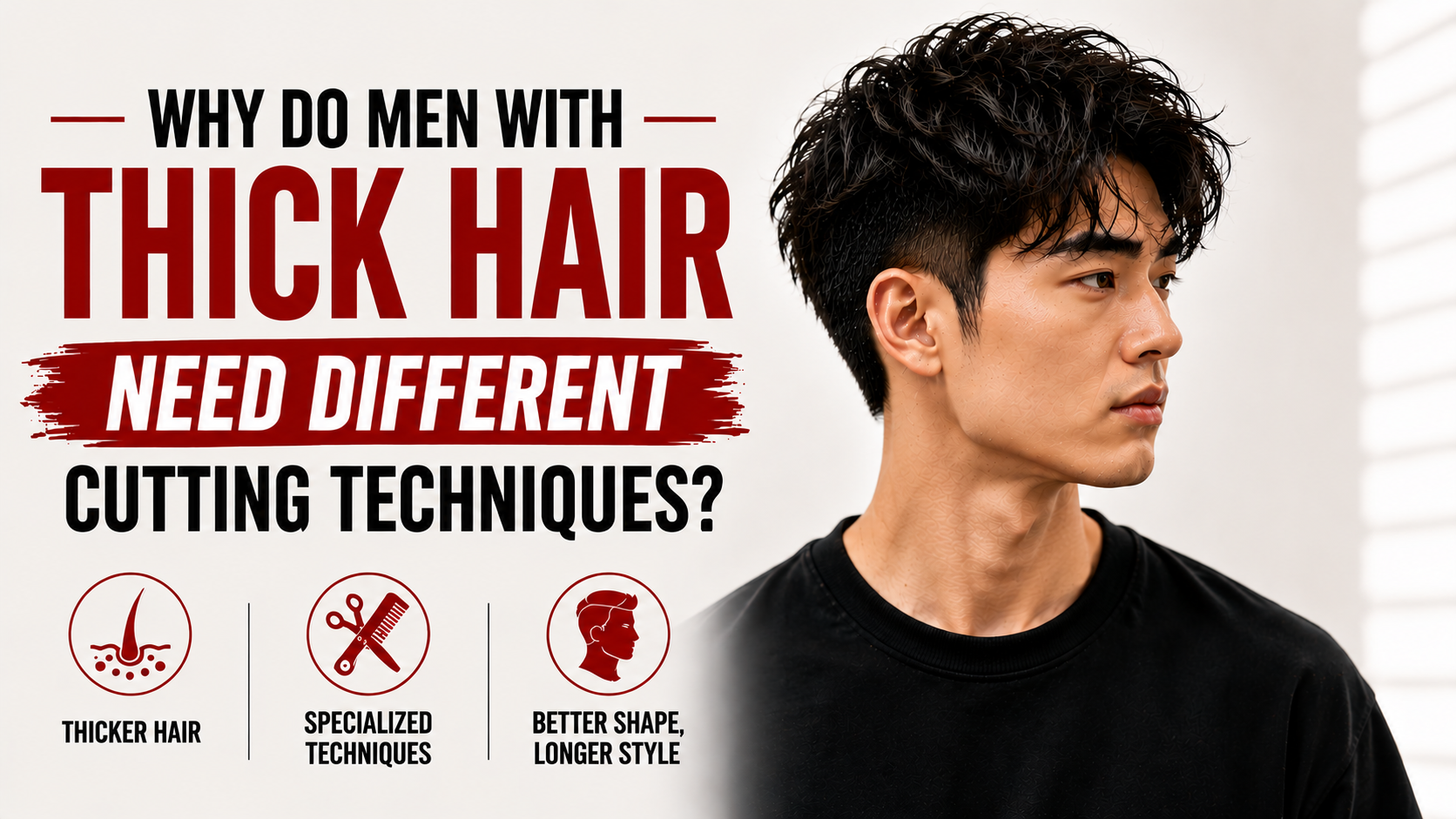
Most men with thick hair have experienced this frustration: they walk into a barbershop, get a decent-looking cut, and then within two weeks it looks completely different from what was intended. The sides start sticking up weirdly. The top gets heavy and won't sit right. Products that were supposed to help actually make it worse. The barber basically shrugged when asked for advice on maintenance.
This isn't a fluke. It's not bad luck. It's because most barbershops use generic cutting techniques that work fine for thin or medium hair, but completely fail with thick hair. The problem is that thick hair requires a fundamentally different approach from start to finish.
The Physics of Thick Hair
Here's what most people don't realize: hair thickness isn't just about how it looks. It's about weight, density, and how hair naturally falls. Thick hair has more individual strands packed into each square inch of your scalp. That means more weight pulling down on each strand.
When a barber cuts thick hair with the same technique they use on thin hair, they're ignoring this basic physics. The hair will behave completely differently than expected. What looks sharp immediately after cutting might look completely different once gravity does its job.
Thick hair also has more density at the roots. This creates a different challenge when fading or blending. The clippers behave differently. The hair sits differently. Everything changes when you're working with actual volume.
Why Standard Techniques Fail
Most barbershops learn one primary cutting method and apply it to everyone. They might adjust the guard size on clippers or the length on top, but they're essentially using the same underlying technique. This works adequately for average hair, but it fundamentally fails with thick hair.
The problem shows up in several ways. First, heavy sections don't lie properly because they're carrying too much weight in the wrong places. Second, fades look blotchy because the density doesn't blend smoothly. Third, the shape doesn't hold as your hair grows because too much weight is left in certain sections.
A barber who actually knows how to cut thick hair approaches this completely differently. They're thinning strategically, not just cutting length. They're removing weight from specific areas to create movement and flow. They're thinking about how the hair will behave under its own weight, not just how it looks when freshly cut and styled with product.
The Asian Hairstyles Advantage
Here's something interesting: the most popular asian hairstyles for men are actually built specifically for thick, straight hair. Korean, Japanese, and other Asian barbering traditions evolved over decades with clients who predominantly have this hair type. These aren't random aesthetic choices. They're cuts engineered specifically for how thick, straight hair behaves.
K-Pop and Modern Korean Styling as Real-World Proof
This approach is clearly visible in modern K-pop and Korean entertainment styling, where thick, straight hair is consistently shaped using layering, debulking, and soft texture work rather than heavy blunt cuts.
Jungkook often wears layered medium-length cuts with natural flow, where internal thinning helps his thick hair fall cleanly instead of expanding outward.
Why These Haircuts Work Technically
The textured layers you see in popular Asian styles aren't just for looks. They're strategically placed to break up weight and create movement. The fades are designed to blend thick density smoothly. The lengths and angles are calculated to work with gravity instead of against it.
Why These Styles Look So Good on Thick Hair
This is why guys with thick hair often see a style online from an Asian barber and think it looks amazing. It's because that style was literally designed for their hair type. It's not a coincidence. It's a purposeful technique.
Best Hairstyles for Thick Hair
Textured Crop with Heavy Debulking: Thick hair is thinned internally and cut into choppy layers so it stops sitting like a “helmet” and instead falls naturally forward.
Low Fade with Layered Top: Clean fade on the sides removes density while the top is point-cut to break weight and improve flow.
Korean Two-Block Cut (Thick Hair Version): Sides are aggressively shortened while the top is heavily layered, so thick hair doesn’t expand outward.
Scissor Cut Medium Flow (Thick Hair Control Cut): No harsh clipper top; just deep scissor layering to reduce bulk while keeping length and movement.
Drop Fade with Soft Fringe: The fade removes side heaviness while the fringe is cut with texture, so it doesn’t sit too straight or heavy.
What Changes in the Cutting Process
A barber experienced with thick hair makes several tactical adjustments. First, they're much more aggressive with thinning. This isn't hack-job thinning that creates weird texture. It's strategic thinning that removes specific weight while maintaining shape and natural appearance.
Second, they use different clipping techniques. Standard fades work fine for thin hair, but thick hair needs multiple-pass techniques. They might use different blade angles or multiple clipper guards in sequence. The goal is blending that looks intentional, not just blurred.
Third, they think about future growth. Where does this hair need to be shaped now so it looks good in three weeks? Thin hair's growth patterns are forgiving. Thick hair's growth patterns are unforgiving. A section that's too heavy will look worse as it grows, not better.
The consultation process is different, too. A barber working with thick hair asks different questions. How much time will you spend styling? Do you prefer hair that sits naturally, or do you want to use a product? What's your lifestyle? These answers shape the entire approach.
The Layering Technique
One of the biggest differences between standard cutting and thick-hair cutting is the layering strategy. Standard cuts might use layers, but they're often too subtle. Thick hair needs more pronounced layering to create texture and movement.
Proper layering for thick hair involves:
Calculating specific angle cuts to reduce weight strategically
Creating texture through point cutting or texturizing techniques
Building movement by shorter lengths on top, transitioning to longer lengths
Removing bulk without creating a choppy appearance
Planning how layers will sit once the hair grows and settles
This is completely different from just "adding some layers" to create variation. It's a technical approach to managing weight and creating the intended silhouette.
Why a Professional Barber Stylist Matters
This is where expertise becomes really important. A professional barber stylist who specializes in thick hair has done thousands of cuts with this specific hair type. They've seen every variation of thick hair. They know exactly what will work and what won't.
When you sit in their chair, they're not guessing. They're not hoping the cut works out. They've already predicted how your hair will behave. They know which sections need aggressive thinning. They know which fade technique will blend properly. They know what product recommendations will actually work for your hair.
This comes from experience that's specifically relevant to your hair type, not general barbering experience. There's a huge difference between a barber who's done ten thousand cuts on various hair types and a barber who's done five thousand cuts specifically on thick hair.
A professional working with thick hair also manages client expectations differently. They'll explain why the cut looks a certain way fresh versus how it'll look once you style it. They'll teach you the actual technique to recreate it at home. They'll explain maintenance without making it sound complicated.
The Styling Education Component
Here's what separates professional cuts from average ones: you actually know how to style it afterward. The barber teaches you the technique. Show you the product they recommend. Explain why certain products won't work. Give you honest feedback about styling difficulty.
This education phase is critical with thick hair because styling options are more limited than with thin hair. You need products that add definition without adding weight. You need techniques that work with your hair's natural behavior. You need to know what won't work, so you stop wasting money.
A professional barber stylist will spend time on this because they know the cut's success depends on what happens at home, not just what happens in their chair.
Want a Style That Actually Works for Your Hair Type?
If you have thick, straight hair, the difference between a “good haircut” and a “great haircut” often comes down to technique; not just style. The right cut should reduce bulk, create movement, and actually grow out well instead of losing shape in a week.
FAQ
Q: Can a regular barber cut thick hair, or do I need someone specialized?
A: A regular barber can cut it, but a specialist will deliver noticeably better results. Thick hair responds differently to standard techniques, so specialized training makes a real difference.
Q: How often should I get my thick hair cut?
A: Every 3 to 4 weeks works best for most thick-haired men. The weight builds up faster, so more frequent trims help maintain shape and prevent looking overgrown.
Q: Will cutting my thick hair make it thinner or more manageable?
A: Strategic thinning makes thick hair more manageable without making it actually thinner. A professional removes weight in specific areas, so your hair behaves better, not thinner overall.
