
How Your Hair’s Porosity, Cuticle, and Cortex Affect the Way Your Curls Turn Out
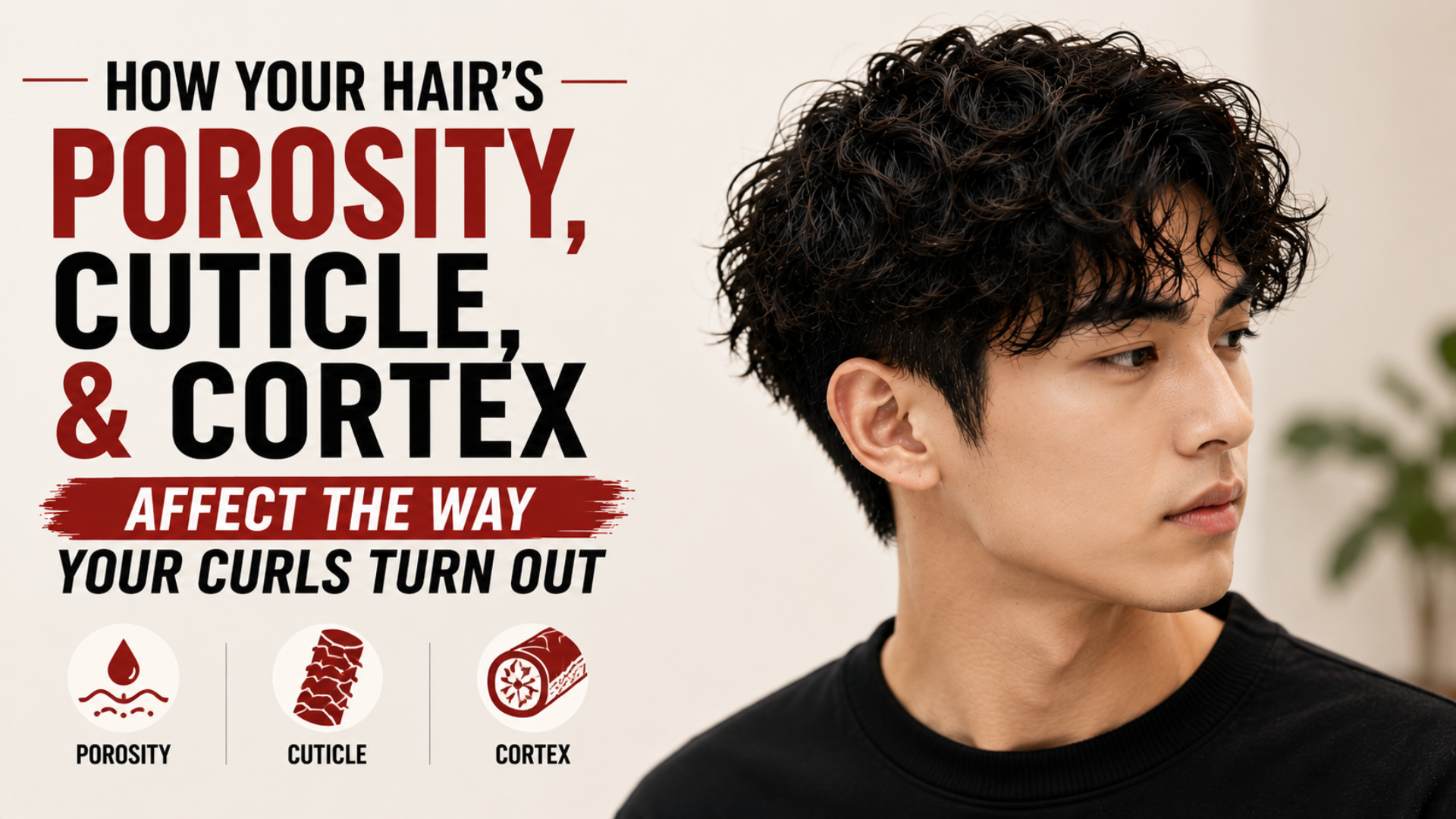
When you think about getting a perm, you might imagine just wrapping your hair around rollers, and the curls magically appear. But there’s more going on under the surface of your hair that decides whether those curls look soft, tight, frizzy, or smooth. Today we’re going to talk about three big things that matter a lot when you get a perm: porosity, cuticle structure, and cortex density.
We’re going to explain these like we’re talking to a smart friend who has never heard these words before. You will learn what these words mean, how they affect curl formation, and why understanding them helps you get better results from your perm. Let’s make this easy and clear.
Prep Your Hair with the Right Curl Cream
Before getting a perm, taking care of your hair can make a big difference in how your curls turn out. Using a mens curl cream, like Naamza’s Curl Defining Cream, helps protect your strands, adds moisture, and makes hair more manageable. It prepares the cuticles and cortex so the perm solution works evenly. Applying it before your appointment or during daily hair care ensures your curls stay soft, bouncy, and healthy. This small step gives your stylist the best foundation for creating long-lasting, beautiful curls that suit your hair type perfectly.
The curly hair care and styling products market was valued at $9,716.0 million in 2021, and is projected to reach $15,654.8 million by 2031, registering a CAGR of 4.7% from 2022 to 2031.
What Is Hair Porosity?
Let’s start with porosity. When we talk about hair porosity, we mean how easily water or chemicals move into and out of your hair strands.
Think of your hair like a sponge. Some sponges soak up water quickly. Some sponges take a long time. Hair porosity is kind of like that.
There are three types of porosity:
Low porosity:
Hair cuticles are tightly packed. This means water and chemicals sit on the hair surface before they slowly seep in. Hair with low porosity can be hard to style because it rejects moisture at first.
Normal porosity:
Hair takes in and holds moisture well. This is the easiest type to perm because the chemicals can work evenly.
High porosity:
Hair has gaps or holes in the cuticle. Water and chemicals enter quickly but can escape just as fast. This hair might feel dry and frizzy because it loses moisture quickly.
How Porosity Affects Your Perm
Perm chemicals need to enter your hair shaft to break and remake bonds that create curls. If your hair has low porosity, the chemicals take longer to enter. This might make the curl formation slower and uneven if the stylist doesn’t adjust the timing.
If your hair has high porosity, the chemicals rush in. That can create curls fast, but it can also be rough on hair that is already damaged because it takes in too much chemical.
So knowing your hair’s porosity helps your stylist pick the right type of hair perm Los Angeles and timing so your curls look great and your hair stays healthy.
What Is the Hair Cuticle?
The word “cuticle” might sound fancy, but it’s really just the outer layer of your hair strand. If you look at hair under a microscope, the cuticle is like tiny roof shingles. These “shingles” protect the inside of your hair.
Healthy Cuticles vs. Damaged Cuticles
Healthy cuticles are flat and smooth. They protect your hair and help it reflect shine.
Damaged cuticles are lifted or chipped. This makes hair feel rough and look dull.
How Cuticles Affect Your Perm
When a perm solution is applied, it needs to get past the cuticle to reach the cortex (we’ll explain cortex soon). Smooth cuticles let the solution pass evenly. But if the cuticles are damaged or lifted, the chemical can enter unevenly. This can cause curls to form unevenly. Some parts might be tight, other parts loose.
Your stylist will check your cuticle condition before your perm. This helps them decide whether your hair needs a gentler solution or a pre-treatment to smooth the cuticles first.
What Is the Cortex?
Now we come to the most important layer inside your hair strand: the cortex. This part holds most of your hair’s strength and shape. Inside the cortex are tiny twisted fibers that give your hair its texture and natural pattern.
Your natural curl pattern is determined by how the cortex fibers are shaped. Some hair shafts are straight, some are wavy, and some are curly. When you get a perm, the chemicals work inside the cortex to break and rebuild bonds so the hair forms a new curl shape.
Why Cortex Density Matters
Different people have different cortex densities. Cortex density means how tightly packed the fibers inside the hair are.
High density: Hair feels thick and strong.
Low density: Hair feels fine and soft.
Hair with high density might take longer for the perm chemicals to work because there’s more material inside the hair. Hair with low density might take less time, but it can also be more fragile.
Your stylist looks at your cortex density to figure out how long to leave the perm solution on your hair. Leaving it on too long can damage hair. Leaving it on too short doesn’t create the curls you want.
How These Three Work Together
So now you know:
Porosity tells us how quickly chemicals enter hair.
Cuticle structure tells us how smoothly chemicals pass into the hair shaft.
Cortex density tells us how much material the chemicals need to work through to reshape the hair.
All three affect your final curls. If your hair has low porosity but high density, the chemicals will enter slowly and take more time to reshape the cortex. If your cuticles are damaged, chemicals might rush in unevenly and create frizzy or inconsistent curls.
That’s why just wrapping hair around rods is not enough. A good perm requires knowing your hair inside and out.
Why This Matters for You
When you understand these things, you can talk to your stylist with confidence and get the result you really want. You’ll know why some perm styles work better on your hair and why some might not work without preparation.
For example:
If your hair is very porous from bleach or heat damage, you might need special treatments before perming to protect your hair.
If your cuticles are lifted from brushing harshly, your stylist might recommend a smoothing treatment first.
If your cortex is very dense, your stylist might adjust timing and solution strength for your best curl result.
This kind of technical understanding helps you choose the right perm style and avoid common disappointments like frizz, dryness, or curls that don’t hold.
Why Choose Naamza for Your Perm
Getting a great perm is not just about the procedure. It’s about understanding your hair and treating it with care and precision. At Naamza, our stylists are trained to do more than wrap your hair around rods. They assess your hair’s porosity, check your cuticle condition, and understand your cortex density before choosing the best perm solution and timing for you.
We take the guesswork out of the process. That means you walk out with curls that last longer, look healthier, and feel great. And we use professional techniques and quality products that protect your hair while giving you the style you want.
Ready for curls that fit your hair type and lifestyle? Book your consultation and perm appointment with Naamza today. Let’s create curls that look natural and beautiful.
Frequently Asked Questions
1. How do I know my hair porosity?
At Naamza, we make it simple. During your consultation, we check your hair’s porosity to see how it absorbs moisture and chemicals. Knowing this helps us choose the perfect perm solution so your curls come out smooth, shiny, and just the way you want.
2. Can my cuticles be prepared for a perm?
Absolutely! Our stylists use professional treatments that smooth and protect your cuticles before perming. This ensures the perm solution works evenly, giving your hair strong, healthy, and beautifully defined curls.
3. Will my perm be safe for my hair?
Yes! At Naamza, we customize every perm for your hair type, porosity, and density. With the right solution, timing, and care, we create curls that last while keeping your hair strong, soft, and healthy. You can enjoy your new style with confidence.
