How Your Asian Haircut Shapes Workplace Perception in 2026: Behavioral Insights!
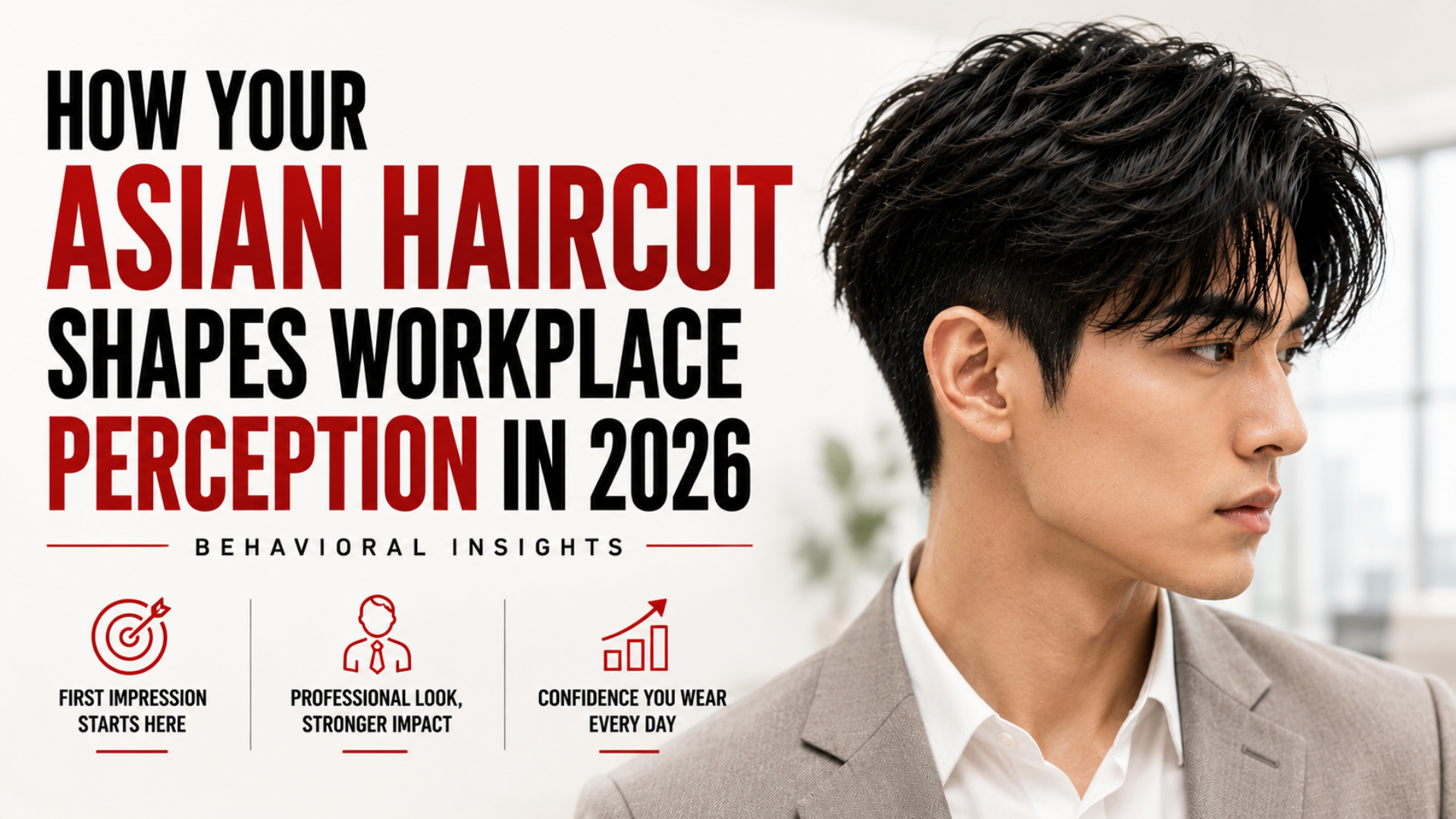
Before you even say a single word in a meeting, people have already formed an opinion about you. That might sound a little unfair, but it's just how human brains work. We process visual information incredibly fast, and a huge part of what people notice first is your hair. Not your shoes, not your watch, your hair. Because it sits right at the top of your face, it's one of the first things anyone sees when they look at you.
Researchers from the University of Chicago and UC Irvine found that well-groomed men earn an average of $14,000 more than their scruffier counterparts
And for Asian men in professional environments, getting this right can actually make a noticeable difference in how confident you feel walking into a room, and how seriously others take you.
This isn't about changing who you are or trying to look like someone else. It's about understanding that your hair, when it's cut well and works with your natural texture, becomes something that quietly works in your favor every single day.
Why Asian Hair is Genuinely Different and Why That Matters
Asian hair has a very specific structure. The individual strands are usually rounder and thicker in diameter compared to other hair types, and the hair tends to grow in a straighter, more uniform direction. This gives it a natural weight and density that, when left unmanaged, can look heavy, flat, or shapeless, especially by the end of a workweek.
Even Asian hair grows the fastest at approximately 1.4 cm per month, compared to Caucasian hair at 1.2 cm and African hair at 0.9 cm. Most people don't realize this isn't a grooming failure, it's just the nature of the hair type.
The problem is that a lot of barbershops don't specialize in this kind of hair. A barber who mostly works with wavy or curly hair is used to thinking about volume and curl definition. But thick, straight Asian hair responds to cuts in a completely different way. Cut it the wrong way and it either sits like a helmet on your head or puffs out at odd angles. Cut it right, with the correct technique, the right amount of bulk removed, and a shape that works with how your hair naturally falls, and suddenly everything changes.
What a Professional Haircut Actually Communicates at Work
When your hair is well-cut and maintained, it signals something very specific to the people around you: that you pay attention to detail. In professional settings, this matters more than most people acknowledge. Whether you're in a client-facing role, working in a corporate office, or building something of your own, the way you present yourself is a form of communication. It tells people whether you take care of things, whether you think ahead, and whether you care about the impression you make.
A clean, well-structured men's professional haircut doesn't just look neat, it looks intentional. There's a difference between hair that just happens to be short and hair that has been shaped with a purpose. The latter reads as confident and put-together, which are exactly the qualities that tend to open doors professionally.
The Shape of Your Haircut and Your Face: Why it's not just Aesthetics
A good barber doesn't just cut hair. They look at the shape of your face, the way your hairline sits, how your jaw is structured, and then they design a cut that balances everything out. This is especially important for Asian men because the bone structure is often different, flatter facial profiles, softer jawlines, or broader foreheads are common, and the right haircut can work with all of these features rather than ignoring them.
For example, a man with a rounder face generally benefits from a cut that adds some height on top, which creates a longer-looking facial proportion. Someone with a wider forehead might benefit from a slightly textured fringe that breaks the horizontal line across the top of the face. These are small adjustments, but they add up to a look that feels balanced and sharp, the kind of look that photographs well in a LinkedIn profile picture, holds up in a boardroom, and makes you look more awake and alert even on low-sleep days.
Texture, Movement, and Why flat Hair Holds You Back
One of the most common things Asian men struggle with professionally is flat, lifeless-looking hair. Because straight, thick hair has a lot of weight, it tends to lie completely flat against the scalp, especially toward the end of the day or in humid weather. This can make even a freshly washed head of hair look dull and unfinished by the time you get to an afternoon meeting.
This is where services like a perm, specifically designed for straight, Asian hair, come in. A well-done men's perm doesn't give you tight curls or anything dramatic. What it does is add movement and natural-looking texture to hair that would otherwise just sit flat. When your hair has even a small amount of wave or body to it, it looks fuller, more modern, and considerably more alive. In a work setting, this translates to looking more energetic and polished, which is a quiet but real advantage.
The key is getting this done by someone who understands how Asian hair absorbs and holds a perm differently from other hair types. The processing time, the rod size, and the technique all need to be adjusted for the specific texture, otherwise the result either falls out too quickly or goes too far in the other direction.
Maintenance is Part of the Equation
Even the best haircut in the world starts to lose its shape after a few weeks. For thick Asian hair, this can happen faster than you'd expect because the hair grows quickly and the weight of new growth starts to pull everything down and outward. Most barbers who work with this hair type recommend coming back every three to four weeks to maintain the shape, rather than waiting until things look obviously overgrown.
The reason this matters in a professional context is consistency. A man who always looks sharp, not just right after a haircut, but throughout the entire month, is someone who seems like they have things under control. It's a small habit, but it compounds over time into a reputation for being put-together and reliable, which is not a bad thing to be known for at work.
Why Choose Naamza
The single biggest mistake most Asian men make with their hair is going to a generalist barbershop that doesn't have real experience with straight, thick hair. At Naamza, the barbers are trained specifically for straight and thick Asian hair, which means every haircut and perm service is built around how this hair type actually behaves, not just how hair works in general.
With two locations in Los Angeles, it's the kind of place where the cut you get is designed around you, your face, your lifestyle, and yes, the impression you want to make at work.
Get In Touch With Us Today!
FAQs
1. How often should I get a professional haircut to maintain a sharp look?
At Naamza, we recommend coming in every 3 to 4 weeks. Asian hair grows quickly and carries more weight, so regular maintenance helps keep the shape clean, structured, and consistent. This way, your haircut looks sharp not just on day one, but throughout the entire month.
2. What is the best professional haircut for Asian men with thick hair?
At Naamza, we don’t believe in one-size-fits-all haircuts. The best style depends on your face shape, hairline, and daily routine. For most clients with thick, straight hair, we focus on removing bulk, adding texture, and creating a shape that falls naturally. This results in a clean, professional look that’s easy to manage every day.
3. Can a perm look professional in a workplace setting?
Absolutely. At Naamza, our perms are designed specifically for straight Asian hair. We focus on creating soft movement and natural texture, not tight curls. The result is a more polished, fuller look that stays controlled and professional, making it easier to style your hair quickly before work.
