
Role of Hair Structure, Porosity, and Scalp Health in Determining Style Definition and Retention
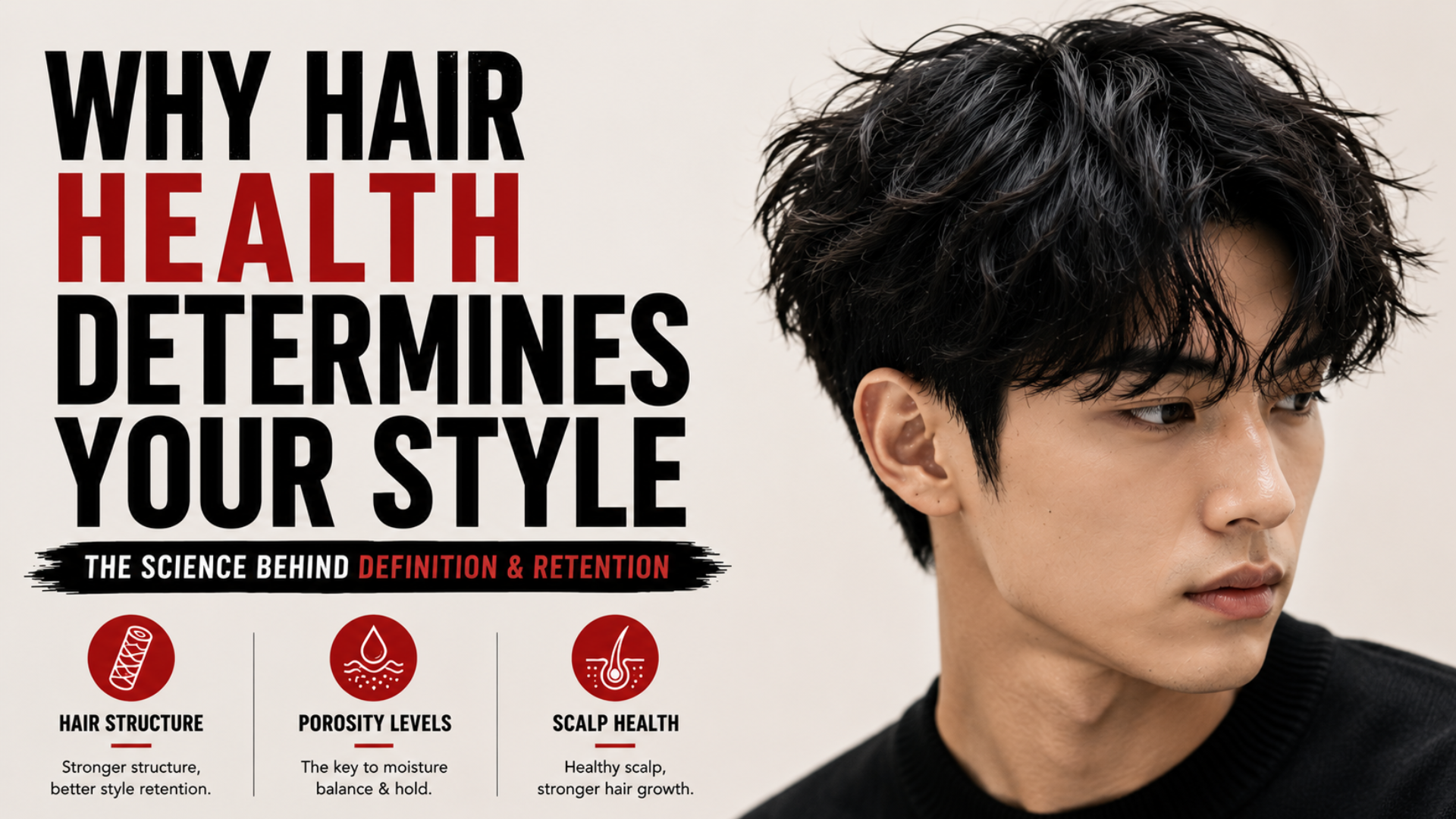
Most men walk into a salon focused entirely on the style they want. The reference photo is ready, the vision is clear, but what they rarely consider is whether their hair is actually capable of delivering that result. Hair health is not a cosmetic concern.
It is a structural one. Damaged, weakened, or neglected hair physically cannot hold sharp lines, defined texture, or clean patterns, regardless of how skilled the stylist is. Understanding why hair health directly determines the outcome of every cut and style you sit down for is not optional knowledge. It is fundamental.
The Structural Integrity of the Hair Shaft and Its Role in Style Retention
To understand why hair health matters so much for clean styling results, you first need to understand what healthy hair actually looks like at a structural level.
The adult human hair is around 20–180 µm in width, and generally grows to a length of approximately 90 cm. It consists of many layers including the cuticle, the cortex and the medulla.
The innermost layer is the medulla. It plays a minimal role in styling performance and is often absent in finer hair. Around that sits the cortex, which is the densest part of the strand and the layer responsible for strength, elasticity, and pigment. On the outside is the cuticle, a series of overlapping, scale-like cells that protect everything underneath.
When hair is healthy, those cuticle scales lie flat and tight against the shaft. The hair reflects light evenly, feels smooth, and holds its shape when cut and styled. When hair is damaged, the cuticle layers lift, crack, or break off entirely. The cortex becomes exposed. The strand loses elasticity and becomes either brittle or overly porous.
A men’s hairstylist cutting into damaged hair is working with an unstable material. The ends don't cut cleanly; they split or fray at the point of the blade. Lines that should be sharp look diffused. Layers that should fall with movement look limp or stringy. The style is appropriate, but the hair can't hold it because the structure can’t support it.
How Porosity Levels Determine the Success of Any Given Style
Porosity is one of the most important and least discussed factors in hair styling outcomes, and it's directly tied to hair health.
Low porosity hair, with tightly closed cuticles, resists moisture and product absorption. It can be difficult to style, but it holds its shape well once the product penetrates. High porosity hair, with raised or damaged cuticles, absorbs everything quickly but loses it just as fast. It responds to styling in the moment but doesn't retain the result.
Most hair damage pushes hair toward high porosity. Heat styling without protection, chemical treatments done too frequently, harsh shampoos, and environmental exposure all of these gradually lift and damage the cuticle, increasing porosity over time.
For men seeking defined styles, whether that's a textured wave, a structured quiff, a clean fade, or a perm pattern , high porosity is the enemy. The product goes in, the style looks good for twenty minutes, and then it collapses. Not because the product is wrong or the technique was poor. Because the hair can't hold onto anything long enough for it to matter.
Restoring and maintaining healthy porosity levels through proper care is what makes the difference between a style that lasts the day and one that disappears by noon.
The Relationship Between Scalp Health and the Quality of Hair Growth
Hair health doesn't begin at the strand. It begins at the scalp. The scalp is where every hair follicle lives, and the condition of that follicle determines the quality of the hair it produces. A healthy scalp, properly moisturised, free of excessive buildup, with good circulation , produces hair that grows with strong cortex density and a tight cuticle from the very start. A neglected scalp, clogged with product residue or suffering from dryness or inflammation, produces weaker hair that arrives already compromised before it's ever touched by scissors or heat.
This is why scalp care is not a separate conversation from haircut quality; it's the foundation of it. Men who maintain a clean, healthy scalp consistently find that their hair not only looks better between cuts but also responds better when they're in the chair. The hair is denser, more elastic, and holds styling products with more reliability.
The Impact of Moisture and Protein Balance on Style Definition
Inside the cortex, hair needs two things in balance to perform well: moisture and protein.
Protein gives the strand its structural rigidity and strength. Moisture gives it flexibility and elasticity. Too much of either, or too little of either, creates problems.
Protein overload makes hair stiff, brittle, and prone to snapping; it holds shape rigidly but breaks rather than bends. Moisture overload makes hair soft and limp; it bends too easily and can't hold definition at all. Healthy hair sits in the balance between these two states.
For defined styles specifically, particularly perms, waves, and textured cuts , this balance is everything. The curl or wave pattern needs the protein structure to maintain its shape and the moisture content to stay flexible enough that it moves naturally rather than crunching.
Achieving that balance through the right combination of products and treatments is what allows a style to look intentional and alive rather than forced and stiff.
Why Choose Naamza
At Naamza, we don't look at a haircut as an isolated service. When you sit in our chair, we're thinking about the full picture, your hair's current condition, its history, how it behaves, what it needs, and where we can take it over time.
We work extensively with Asian and straight hair types, which come with their own specific structural characteristics and challenges. We understand low porosity hair, thick cortex density, and the unique way these hair types respond to cutting, perming, and styling techniques. That knowledge informs every decision we make, from how we cut to what we recommend you do between visits.
Book your appointment today. Let us build a plan for your hair that actually works.
Frequently Asked Questions
Q1: How often should I get a haircut to maintain healthy hair and a sharp style?
Ans 1: For most men, every three to four weeks keeps the style clean and prevents split ends from travelling up the shaft. If your hair grows quickly or you're maintaining a precise cut, every two to three weeks is more appropriate. Consistency matters more than frequency.
Q2: Can damaged hair still hold a perm or textured style?
Ans 2: Yes, but the results will be significantly compromised. Damaged hair with high porosity struggles to hold curl patterns evenly, and the perm tends to drop faster. Most professional stylists will recommend a period of restoration and strengthening treatments before applying any chemical service to heavily damaged hair.
Q3: What's the single most damaging thing men do to their hair daily?
Ans 3: Washing with hot water and harsh sulphate shampoos every single day. Hot water strips the natural oils that protect the cuticle, and sulphates remove what's left. Switching to lukewarm water and a gentle, sulphate-free shampoo used three to four times a week makes a visible difference in hair health within weeks.
