Why Asian Straight Hair Behaves Differently Than Other Ethnic Hair Types
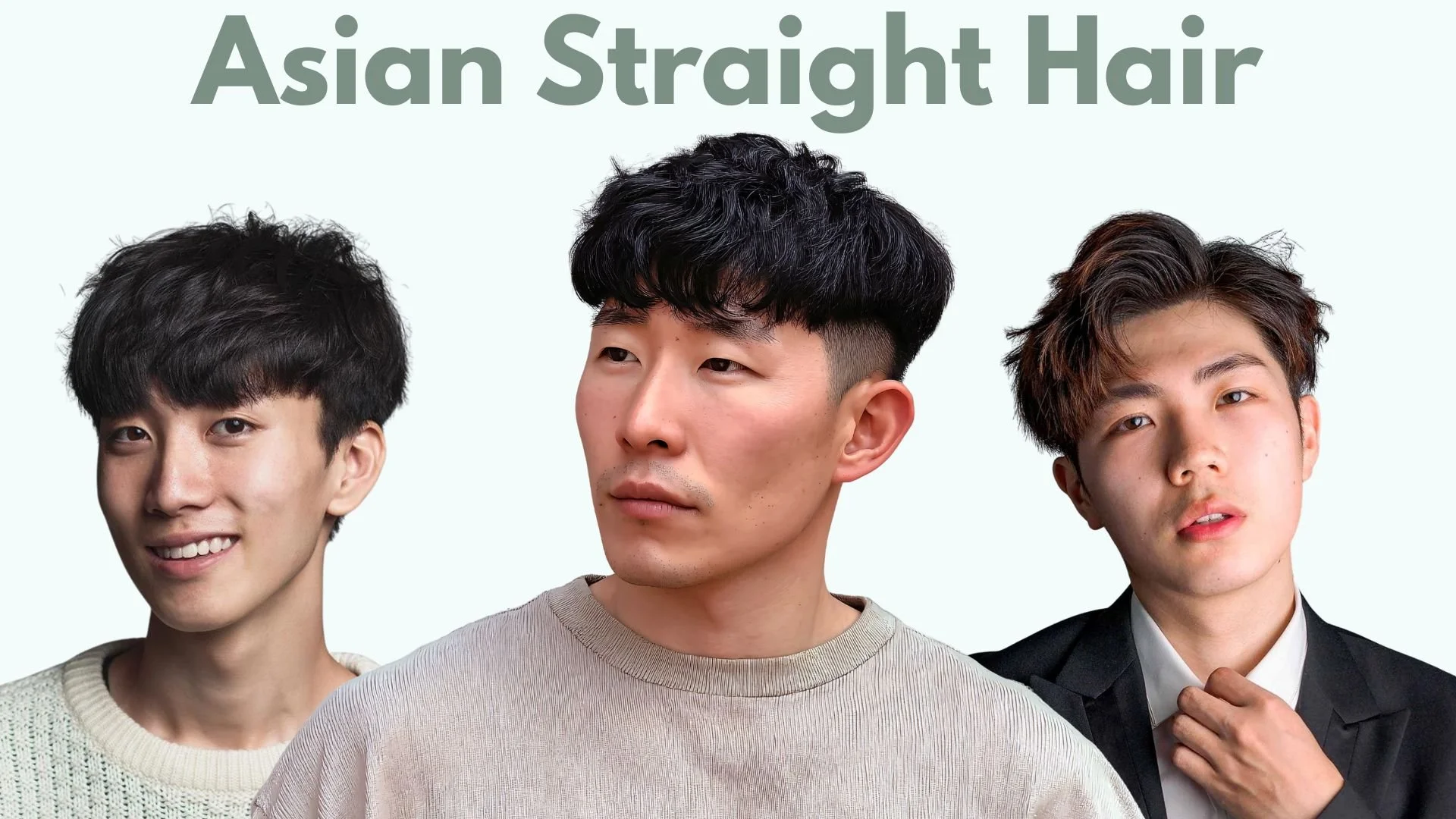
Ever wonder why a haircut or product looks perfect on someone else but just doesn’t work for you? The answer isn’t the style or the product; it’s your hair and ethnicity. The biological structure of Asian hair is unique, which makes it behave differently from other ethnic hair types. Understanding these differences helps you choose styles that truly work, avoid common styling blunders, and know why skilled barbering matters.
Did you know that up to 86.6% of East Asians have straight or wavy hair? This isn’t about ranking hair types; it’s about understanding how, as an Asian, your hair works so you can style along it, not against it.
Strand Thickness and Density in Asian Hair
Asian hair often has thicker, straight individual strands, even when overall density is average. This creates the feeling of heaviness and fullness. Caucasian hair may appear fuller due to higher density, but feel lighter because each strand is finer.
This difference explains why Asian straight Hair can look bulky without proper shaping. A common mistake is over-thinning to reduce weight. In reality, removing too much internal support causes hair to separate and stick out instead of lying naturally flat.
The Science Behind Hair Structure and Ethnicity
Hair-follicle shape plays a vital role in hair growth.
Asian hair follicles are commonly round! producing smooth, straight strands with a circular cross-section. Caucasian hair follicles are more oval. Allowing straight or wavy hair with moderate flexibility. African hair follicles are more curved. It creates tightly coiled or kinky strands with sharper bends.
The round shape of Asian hair gives it even strength and natural shine. Flatter or elliptical strands in other hair types bend more easily. Plus, they may break at stress points.
The EDAR370A gene variant is strongly associated with the thickness and straightness of East Asian hair.
East Asian hair also grows faster than Afro-Caribbean or Caucasian hair. Averaging about 1.3 cm per month, it often has the longest growth cycle. It lasts up to nine years compared with two to seven years for other hair types.
Studies on tensile strength show that Asian hair tolerates heat and tension differently than finer Caucasian hair or tightly coiled African hair. This does not mean it cannot be damaged. It just requires barbers to adjust technique, timing, and tools according to its unique biology.
Why Hair Types Behave Differently Even With the Same Products
Hair behavior starts below the surface. Genetics accounts for approximately 85% to 95% of variation in hair texture. Majorly, controlling follicle shape, strand thickness, cuticle structure, and growth patterns. These factors vary across ethnic hair types. This is why different ethnic hair responds differently to the same haircut or styling routine.
Barbering relies on recognizing these differences. When hair is treated as if it behaves the same across all ethnicities, the results often fall short.
How the Structure of Asian Straight Hair Affects Behavior
Because strands are straighter, straight Asian hair resists bending and holds less natural texture. This is why it can look stiff or bulky when cut incorrectly. Layering or thinning techniques designed for Caucasian or wavy hair may cause Asian hair to stick out instead of flowing naturally.
A great haircut is more than removing length. It requires an understanding of other factors. For instance, face shape, hair texture, and growth patterns. Even daily styling habits have a huge influence. Like, for Asian hair, controlling weight and shape is far more important than forcing texture.
How Asian Hair Differs From Other Hair Types
1.Caucasian Hair
Caucasian hair presents two unique characteristics for hairstylists as its individual strands are thinner and its texture patterns show different degrees of smoothness, which enables stylists to create volumized, wavy, and dynamic hairstyles through the process of hair layering. The looser cuticle structure of the hair enables products to penetrate the hair more effectively.
Asian hair, with its thicker strands and compact cuticle, reacts differently. Heavy layering can collapse its shape. Also, products designed for Caucasian hair may feel greasy or ineffective. Barbers must shift focus from creating volume to managing bulk and growth direction.
2. African Hair
African hair is tightly coiled. This creates natural volume but introduces weak points along the strand. Moisture retention and curl preservation are key. Asian hair lacks these bends, making it stronger in tension but less flexible. Techniques for coiled hair, like heavy texturizing, don’t translate well.
3. Latin Hair
Latin hair can range from straight to wavy to loosely curly. Individual strands are medium in thickness, which allows easier shaping. Asian hair is more consistent and thicker, which makes it predictable but less flexible. Layered fades or texturizing used on Latin hair may make Asian hair appear bulky if not carefully controlled.
4. Middle Eastern Hair
Middle Eastern hair is dense. Often wavy or curly, and absorbs oils well. This creates volume and texture. Asian hair grows straighter with a tighter cuticle. So lift and texture techniques that work on Middle Eastern hair may overwhelm it. Precision and restraint are critical for managing Asian hair effectively.
5. Hispanic Hair
Hispanic hair shows diverse patterns of growth because its strands typically grow thicker with natural wave patterns. Asian hair, in comparison, is more uniform and straighter. The Hispanic hair styling techniques, which use layering and texturizing methods to enhance natural wave patterns, require modification because these methods make Asian hair develop a bulky and stiff appearance.
Growth Patterns and Direction Challenges
Asian hair generally grows straight down with defined directional patterns. Flat crowns or sides that stick out are common challenges. Cutting against growth may look clean at first, but it often causes long-term styling issues. Understanding natural growth direction is essential for styles that grow out well and remain easy to manage.
Barbering Styles That Work Best for Asian Hair
Here are six barbering styles for Asian Hair:
Textured Crop – Short sides with subtle texture on top; controls bulk and adds movement.
Undercut – Short sides, longer top; emphasizes natural straightness.
Side Part – Clean, classic, and easy to maintain; works well with straight growth.
Fade or Taper – Gradual shortening on sides and back; requires precise blending.
Pompadour – Longer top styled upward; thick strands add volume and shine.
Down Perm Styles – Slightly relaxes stubborn straight areas, making hair more manageable.
Why Choose Naamza
At Naamza, we specialize in Asian hair. Our specialists combine deep knowledge of hair structure with precise barbering techniques. Our every cut is tailored to your hair type, growth patterns, and personal style. We cater precision cutting to advanced styling with utmost precision. Our barbers create looks that are easy to maintain and grow out beautifully.
With Naamza, you get more than a haircut. You get a style designed to fit your lifestyle perfectly.
Book your appointment today and experience a haircut that truly works with your hair, not against it.
Frequently Asked Questions
1. How often should I get a haircut if I have Asian hair?
Ans 1: Asian hair grows about 1.3 cm per month and can feel heavy quickly. Most clients benefit from a trim every 4–6 weeks to maintain shape and prevent stiffness.
2. Can I use the same products on my Asian straight hair that I use on other hair types?
Ans 2: Not every situation demonstrates this pattern. The straight hair of Asian people possesses a tighter and denser cuticle structure, which prevents effective product absorption. Light formulas get easily absorbed and provide optimal results, whereas heavy creams and oils create a greasy feeling because they remain on the skin's surface.
3. Why does layering sometimes make my Asian hair look bulky?
Ans 3: Standard hair layering methods can cause hair strands to stick out because strands have both thickness and straightness. Barbers use their expertise to control hair weight while giving a natural haircut that grows out without visible lines.
